


Wiltson Energy Low Temperature Battery Solutions for Extreme Conditions
Get Datasheet & Recommendation
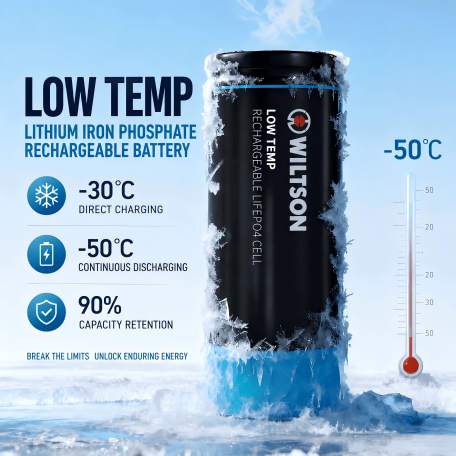
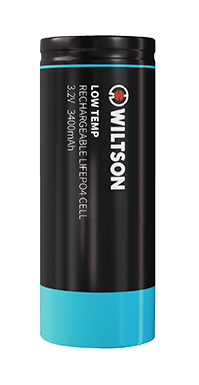
Designed to directly charge at -30 °C
Discharge at -50 °C with over 90% efficiency.
Battery Cells





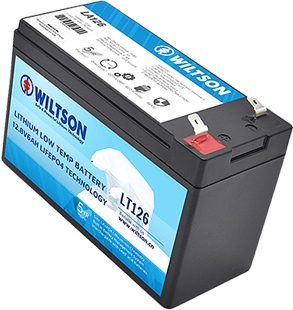
Battery Packs
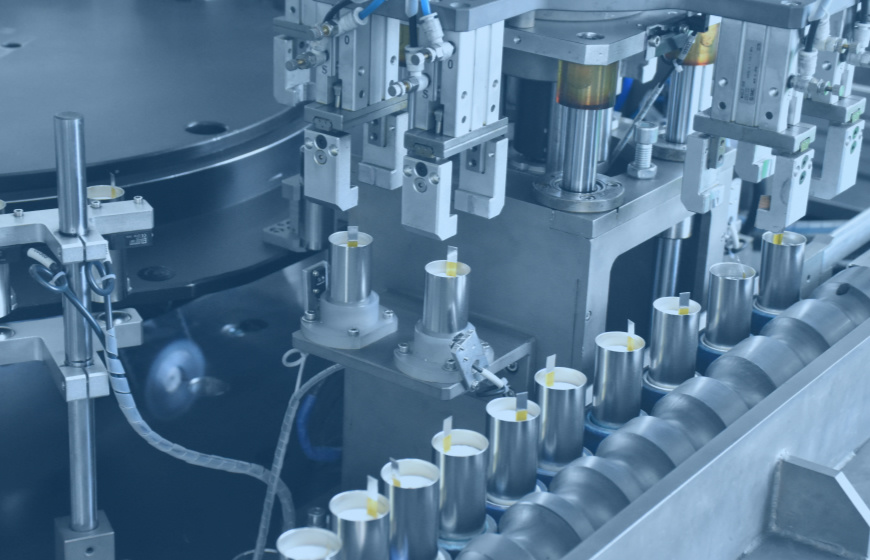
Technological Innovation
All investment and research on technology are aimed at providing customers with more secure and
stable
products with superior performance and market competitiveness.

About us
The Professional Manufacturer of LiFePO4 Batteries
Learn More
10
00,000
Accumulated cell shipments
of 100 million

20
20 years of industry
experience

15
%
R&D investment accounts for
15% of revenue
Why Cold Affects Standard Lithium Batteries
Below 0°C, standard lithium-ion batteries lose capacity, suffer rising internal
resistance, and risk permanent damage. Understanding the mechanism is the first step
to choosing the right low temperature battery.
Thickening Electrolytes
Low temperatures make liquid electrolytes viscous, slowing lithium-ion movement between the electrodes and reducing the available capacity of the cell.
Lithium Plating
Charging below 0°C (32°F) causes lithium ions to coat the anode as solid metal instead of intercalating, forming dendrites that can cause short circuits and permanent capacity loss.
Voltage Drop
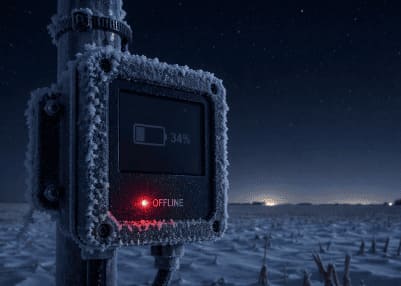
Increased internal resistance leads to sudden voltage sag and reduced power output, causing unexpected shutdowns of equipment in the field.
The Wiltson Low-Temperature Solution
Instead of relying on external heaters, Wiltson Energy re-engineers the cell itself.
A nano-scale LiFePO4 cathode, hard carbon anode and a proprietary low-viscosity
electrolyte keep ion channels open in extreme cold — so the battery can be charged
and discharged where standard cells simply stop working.
-30°C
Direct Charge
-50°C
Discharge
>90%
Low-Temperature Efficiency
5-10C
High-Rate Discharge
Low Temperature Battery FAQ
What is a low temperature lithium battery?+
A low temperature lithium battery is a specialized energy storage cell engineered
with modified electrolytes and chemistries so it can discharge or charge in
freezing conditions — down to -20°C, -40°C or lower — where standard
lithium-ion batteries lose capacity, suffer high internal resistance, or
experience permanent damage. Wiltson Energy's
26650 low-temperature LiFePO4 cells
discharge at -50°C and accept direct charging at -30°C.
What is the lowest temperature a lithium battery can handle?+
Standard lithium-ion cells typically discharge down to about -20°C and must be
charged above 0°C. Purpose-built low temperature cells go much further:
Wiltson Energy's low-temperature LiFePO4 cells operate from -50°C to
+60°C, with direct charging supported from -30°C.
Can I charge a LiFePO4 battery in freezing temperatures?+
Standard LiFePO4 batteries should not be charged below 0°C (32°F), because
lithium plating can permanently damage the anode. Common workarounds are BMS
low-temperature cutoff and self-heating battery packs. A simpler alternative is a
true low-temperature cell — such as Wiltson Energy's 26650 low-temperature
LiFePO4 — that charges directly at temperatures down to -30°C without
external heating.
Are cold temperatures bad for lithium batteries?+
For standard batteries, yes: cold thickens the electrolyte, raises internal
resistance, cuts usable capacity and causes voltage drops; charging below
freezing adds the risk of lithium plating. Batteries designed for low
temperatures keep performance stable — Wiltson Energy's low-temperature cells
retain over 90% efficiency in extreme cold.
How do I choose a battery for cold climates?+
Start with three questions: What is the lowest expected temperature? Do you need
to charge, discharge, or only store the battery in the cold? What is the
application (solar tracker, AGV, RV, medical equipment)? If you must charge below
0°C, choose a self-heating pack or a true low-temperature cell.
Share your scenario with the Wiltson team and we will
recommend the right configuration.
News
The world's leading manufacturer of 26650 LiFePO4 batteries