

What is a low temperature lithium battery?
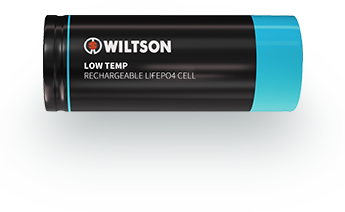
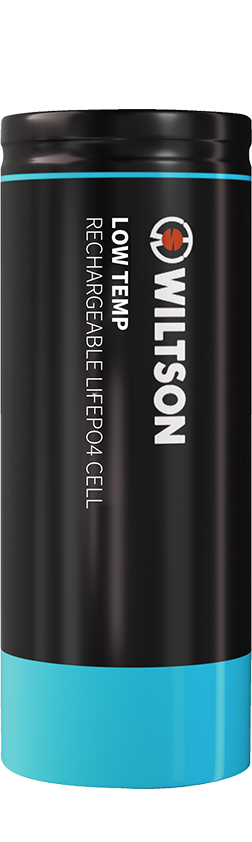
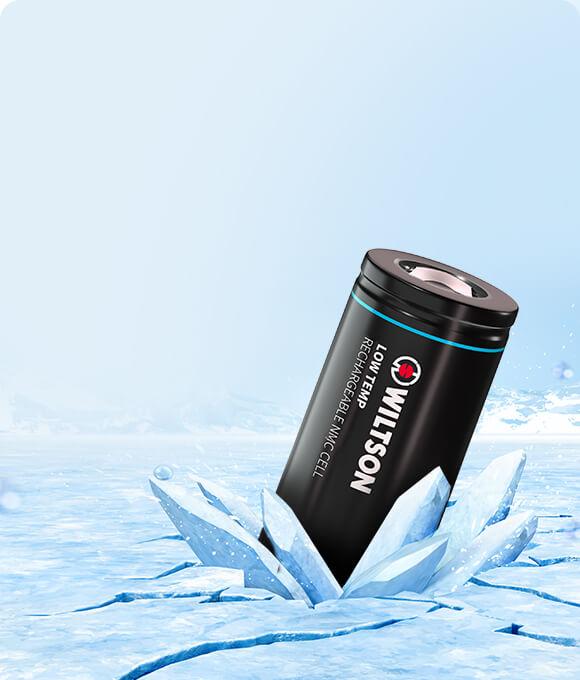
A low temperature lithium battery is a lithium cell built with a modified electrolyte that stays conductive below freezing, so it can charge and discharge in cold where standard lithium-ion cells fail. Wiltson Energy's 26650 LiFePO4 low-temperature cells charge directly down to -30℃ with no pre-heating and discharge at -50℃ while retaining over 90% of rated capacity. A standard LiFePO4 cell cannot be charged below 0℃ at all — attempting it causes lithium plating and permanent capacity loss, which is why conventional cold-weather packs need heating pads, extra BMS sensors, and a 7 to 8 hour warm-up before they accept current. Wiltson cells remove that hardware entirely: the low-temperature performance comes from the electrolyte chemistry, not from an external heater. Rated cycle life is 2000 cycles at normal temperature and 1500 cycles under low-temperature operation, with maximum 7C discharge at -40℃.
Defy the Cold: Wiltson Advanced Low-Temperature LiFePO4 Technology
★ ★ ★ ★ ★ ★ ★ ★
Engineered for extreme environments. Instant charging without pre-heating. Uncompromised safety
Standard LiFePO4 Battery
Risk of lithium plating & damage
From -20℃ to 0℃
Need 7-8 hour heating
Needs heating pads & extra BMS sensors
Life drops significantly in cold
Safety cannot be guaranteed
Wiltson Low-Temp Pro Series
-30℃
Instant Charging
No waiting, plug and play
No external heating device needed
2000
Still safe at low-temp charging
Three Ways to Charge a Lithium Battery in the Cold
Most "low temperature" battery packs solve cold charging in one of two ways: block it below freezing, or warm the pack first. Wiltson takes the third option — the cell itself accepts charge at -30°C, with no heating hardware at all.
| Approach | How it handles cold charging | Warm-up wait | Extra hardware & energy | Best fit |
|---|---|---|---|---|
| BMS low-temperature cut-off | Blocks all charging near 0°C to protect standard cells from lithium plating | Hours — until the pack warms up on its own | None, but the site sits discharged after every cold night | Sites that can wait for warmer weather to recharge |
| Self-heating battery | Built-in pads warm the cells above freezing before the BMS allows charge | Typically 80–170 minutes from -20°C | Heating pads, sensors and control circuits; heater energy competes with scarce winter solar | When the cell chemistry cannot accept charge in the cold |
| Wiltson native low-temp cell | Patented electrolyte keeps charge acceptance down to -30°C — plug in and charge | None — instant charging | No heating device at all | Off-grid, outdoor and cold-climate sites where winter recharge cannot wait |
Cold charging is still rate-limited: charge current is derated at low temperature to protect cycle life. For the full engineering breakdown, read Low Temperature LiFePO4 Charging Without Heaters.
- -30°C
-
Charging Directly
No need of heating

- Military Certified
-
No explosion with gunshot or acupuncture

- 5- 10C
-
High Power
Max 7C discharging at -40℃

- >90%
-
Low-temp Capacity
Why does Wiltson's electrolyte work in the cold?
The research of basic materials is the cornerstone of lithium battery
design and development. We use the nanoscale LiFePO4 cathode material, paired with a hard-carbon graphite anode
-
-LiLiFePO4Nanoscale LiFePO4
-
-CGraphiteSmall particle graphite
R & D equipment
Equipped with high -precision material analysis characteristics, fully automatic precision battery cell research and development equipment, and comprehensive battery performance and safety measurement analysis equipment to ensure the safety and reliability of the final product.
26650 low-temperature cell specifications
| Model | Voltage(V) | Capacity(mAh) | Discharge current(A) | Charge current(A) | Charging temperature range | Discharging temperature range | Maximum weight(g) | Specification |
|---|---|---|---|---|---|---|---|---|
| LT3200 | 3.2 | 3200 | 16 | 9.6 | -30℃-45℃ | -50℃~60℃ | 84 | download |
| LT3400 | 3.2 | 3400 | 10 | 10.2 | -30℃-45℃ | -50℃~60℃ | 84 | download |
Low Temperature Battery FAQ
What happens if I charge a standard LiFePO4 battery below 0°C?
Charging a standard lithium-ion cell below 0°C causes lithium plating: metallic lithium deposits on the anode instead of inserting into it. This permanently reduces capacity and, in extreme cases, can create internal short circuits. That is why standard packs block charging below freezing.
Can Wiltson low-temperature cells really charge at -30°C without a heater?
Yes. The cold performance comes from Wiltson's patented electrolyte chemistry and electrode materials (nanoscale LiFePO4 cathode with a hard-carbon graphite anode), not from any heating module. Charging starts instantly at temperatures down to -30°C, with zero pre-heating wait.
Do I need heating pads or extra BMS sensors with Wiltson low-temp cells?
No. There are no heating pads, no warm-up energy budget and no extra temperature sensors. The pack stays simpler, lighter and more reliable than a self-heating design.
How much capacity do the cells keep in extreme cold?
The 26650 low-temperature cells discharge at -50°C while retaining over 90% of rated capacity, and deliver up to 7C discharge at -40°C.
What is the cycle life in low-temperature use?
Rated cycle life is 2000 cycles at normal temperature and 1500 cycles under low-temperature operation.
Which low-temperature cell models are available?
Two 26650 LiFePO4 models: LT3200 (3.2V, 3200mAh) and LT3400 (3.2V, 3400mAh). Both charge from -30°C to 45°C and discharge from -50°C to 60°C. Contact us for the full datasheet.
Contact Information