



Can LiFePO4 Batteries Charge in Freezing Weather?
Can LiFePO4 Batteries Charge — in Freezing Weather?
Senior Battery Engineer, Wiltson Energy
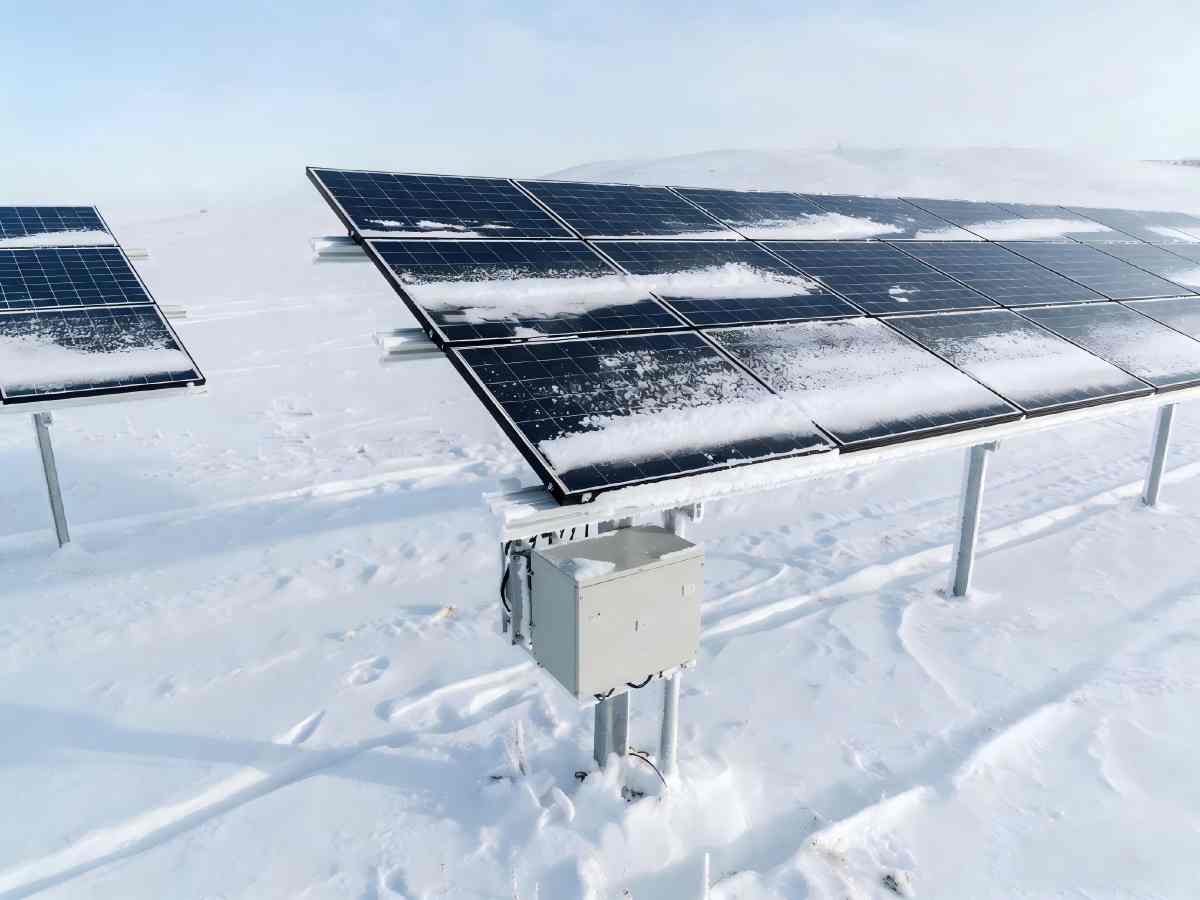
Most LiFePO4 datasheets hide the cold-weather problem in a single line: 0°C minimum charge temperature. Not 0°F. Zero Celsius. Below that point, many Battery Management Systems (BMS) lock charging out entirely.
Key Takeaway
Discharging an LFP battery in the cold mainly reduces usable capacity. Charging it in the cold can cause lithium plating, permanent capacity loss, and internal short risk. That is why the charge limit matters more than the discharge limit.
For indoor or mild-climate installations, that limit may never matter. For outdoor solar trackers, unattended sensors, marine systems, cold-chain hardware, and batteries left outside through real winter, it becomes an operational constraint. The usual workaround is a heated enclosure or self-heating pack. A better approach is to make the cell chemistry handle cold charging directly.
Why Charging Cold Is Not the Same as Running Cold
The common mistake is treating low-temperature discharge and low-temperature charge as the same requirement. They are not. One is a performance penalty; the other is a degradation mechanism.
Cold Discharge Reduces Output
The electrolyte thickens, ions move slower, and impedance rises. The result is lower usable capacity and weaker output current.
Cold Charge Can Plate Lithium
Below 0°C, lithium ions may fail to intercalate into the graphite anode fast enough and deposit as metallic lithium.
The BMS Blocks Charging
A charge cutoff is not conservative firmware for its own sake. It protects the cell from a real failure mode.
Two Ways to Fix Cold Charging
Most cold-weather LFP projects choose between heating the battery first or using a cell built to accept charge at low temperature. Both can work. They create different design burdens.
Cold-charging design trade-off
| Factor | Heated Pack / Enclosure | Modified Low-Temp Electrolyte |
|---|---|---|
| How it works | Warms cells before the BMS allows charging | Maintains workable ion transport at low temperature |
| Energy cost | Consumes power before charging starts | No heater energy draw |
| System complexity | Adds heating elements, controls, insulation, and failure points | Shifts the fix into the cell design |
| Best fit | Grid-backed or generator-backed systems | Solar-only, remote, and unattended winter systems |
Cold-charge behavior depends on cell design, charge rate, BMS limits, and validated test temperature.
The Failure Mode: Lithium Plating
Lithium plating is the reason the 0°C charge limit exists. It is not a brand preference or a firmware quirk.
- Intercalation slows down — cold graphite anodes cannot accept lithium ions at the same rate as warm anodes.
- Metallic lithium deposits — lithium can plate onto the anode surface instead of entering the graphite structure.
- Damage accumulates — plated lithium does not fully recover on the next discharge cycle, so capacity loss compounds over time.
What Wiltson LT Series Changes
Wiltson LT Series uses modified electrolyte chemistry to extend the stated charge lower limit to -30°C and the stated discharge lower limit to -40°C. The point is not to warm the battery faster. The point is to remove the warmup step from the system design.
That matters because some low-temperature electrolyte approaches can trade long-term durability for cold performance. Wiltson states that the LT Series maintains safety behavior and cycle-life consistency with standard LFP under defined test conditions.
Where the spec changes the outcome
Cold-charging capability is a narrow spec, but in the right application it decides whether the system works through winter. Solar street lighting, environmental monitoring stations, cold-chain trackers, marine electronics, and emergency backup infrastructure often fail when the battery cannot accept charge during the only available charging window.
In those systems, a heater is not free. It competes with the load for the same limited winter energy budget. Removing that heater can simplify the bill of materials and reduce field-maintenance risk.
When to specify cold-charging LiFePO4
| Application | Cold-Weather Problem | Why LT Series Helps |
|---|---|---|
| Solar trackers and street lights | Short winter charge windows and sub-zero mornings | Accepts charge without heater warmup |
| Remote IoT nodes | Months of unattended operation | Reduces maintenance triggers |
| Cold-chain logistics | Transit exposure and no on-site operator | Keeps monitoring hardware online |
| Emergency backup | Failures appear during the worst weather | Removes heater dependency |
FAQ
1. Can a standard LiFePO4 battery charge below 0°C? ▼
Most standard LiFePO4 batteries should not charge below 0°C. The BMS usually blocks charging to prevent lithium plating on the graphite anode.
2. Is discharging below freezing also dangerous? ▼
Cold discharge mainly reduces available capacity and output current. It is inconvenient, but it is not the same failure category as cold charging.
3. Why do self-heating packs reduce winter energy efficiency? ▼
A self-heating pack must spend energy to warm the cells before charging begins. In grid-backed systems that may be acceptable. In solar-only winter systems, that power comes from the same limited budget that should run the load.
4. What is different about low-temperature electrolyte? ▼
Low-temperature electrolyte formulations are designed to maintain ion conductivity further down the temperature scale. That helps the cell accept charge without relying on an external heater.
5. What should buyers ask for before specifying a cold-charging battery? ▼
Ask for charge-current limits at the target temperature, discharge curves, cycle-life data under repeated sub-zero charging, and BMS cutoff behavior. A minimum temperature rating without test conditions is not enough.
Conclusion
Standard LFP batteries usually do not charge below freezing. That limit comes from cell chemistry, not a random manufacturer decision, and firmware alone cannot remove the lithium-plating risk.
If your installation stays above 0°C year-round, a standard pack may be enough. If the system must recharge outdoors in winter, ask for validated cold-charge data before specifying a heated enclosure. Wiltson LT Series exists for that exact decision point: direct cold charging without turning the battery into its own heater load.
Need a battery that charges below freezing?
Request LT Series charge and discharge curves for your exact operating temperature.
Request Cold-Temperature Cell DataAsk for -30°C charge limits, -40°C discharge data, cycle-life results, and BMS configuration support.