

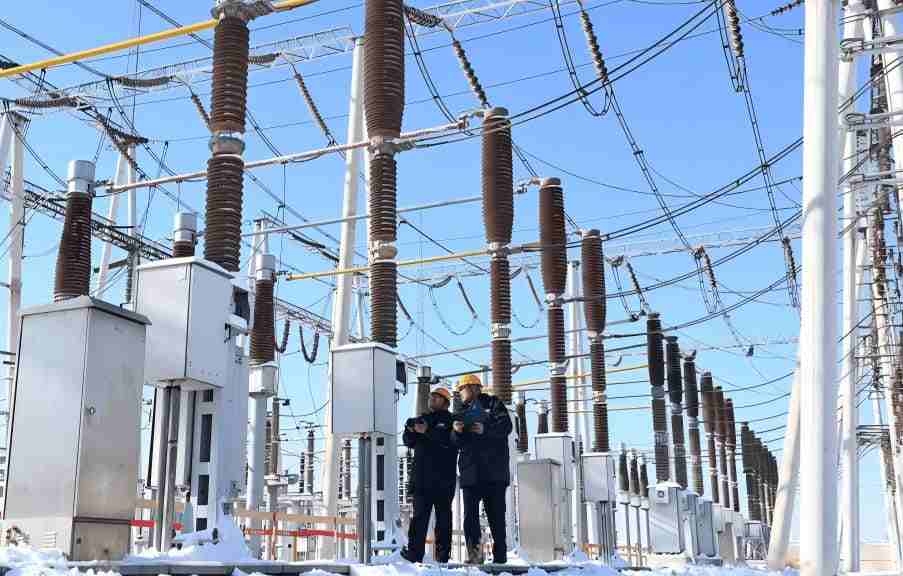
Why Grid Monitoring Equipment Goes Blind in Winter (And How to Fix It)

Thank you! Wiltson Team will contact you shortly!
Date:2026-03-31

Why Grid Monitoring Equipment Goes Blind in Winter (And How to Fix It)

Why Grid Monitoring Equipment Goes Blind in Winter (And How to Fix It)
Utility EngineeringMarch 31, 2026

Why Grid Monitoring Equipment Goes Blind in Winter (And How to Fix It)

The systems marketed as the solution—heated lithium batteries—actually accelerate the failure. Here is how to escape the heating trap.

EJ

Ethan Jin

Senior Battery Engineer

Why Grid Monitoring Equipment Goes Blind in Winter

February 2021. Texas. The polar vortex hit, temperatures plunged to -20°F, and the grid buckled under unprecedented demand. But here's what the headlines missed: thousands of remote monitoring devices went dark before the grid failed. Fault indicators stopped reporting. Pole-top RTUs lost communication. SCADA gateways dropped offline.

The culprit wasn't the cold itself. It was the batteries.

While utility engineers focused on generation capacity and transmission lines, a quieter crisis unfolded in the field: battery backup systems designed for "outdoor use" failed exactly when grid visibility mattered most. The systems marketed as the solution—heated lithium batteries—actually accelerated the failure.

The heating modules consumed 30-50% of backup energy just to keep the batteries warm. When solar panels iced over and grid power disappeared, those heaters drained reserves faster than the monitoring equipment itself.

This article challenges a belief that's become gospel in the utility sector: "Heating modules are necessary for outdoor lithium batteries." We've found in our deployments that this assumption costs you visibility, runtime, and money—and how low-temperature LiFePO4 chemistry eliminates the heating trap entirely.

The Real Cost of "Outage Blindness"

When grid monitoring equipment loses power in winter, the consequences cascade far beyond a dead battery.

Extended Restoration Times

Without remote fault location data, crews resort to manual line patrols. In a 2019 ice storm, one utility reported delays averaging 4.2 hours per circuit because pole-top indicators went offline. The cost: $180,000 in customer compensation for a single storm.

Regulatory Exposure

NERC and PUC requirements mandate continuous monitoring. Gaps in SCADA data trigger compliance reviews. One Western utility faced a $250,000 penalty after winter monitoring outages left them unable to document fault response times.

Emergency Dispatch Costs

Winter truck rolls in rural areas cost $800-2,000 per event. A single substation with unreliable battery backup can generate 5-10 unnecessary dispatches per winter for manual operations.

Lost Forensic Data

When monitoring goes dark during faults, high-resolution event data disappears. Insurance claims, equipment warranty disputes, and predictive maintenance decisions all suffer.

Where Grid Monitoring Batteries Fail First

Not all equipment fails the same way. Understanding the failure modes helps target upgrades.

Pole-Top RTUs and Feeder Terminal Units

Standard LiFePO4 batteries have BMS charging cutoffs between 0°C and +5°C. When ambient temperatures drop below freezing, the battery can't accept charge from the solar panel. It slowly depletes powering the RTU's radio and I/O modules.

Lead-acid avoids the charging lockout but suffers massive capacity loss (50%+ at -20°C) and accelerated sulfation from repeated deep cold discharge.

Recloser Control Cabinets

Cold-soaked lead-acid batteries exhibit high internal resistance. When the controller attempts to transmit via cellular modem—drawing brief high-current pulses—the battery voltage sags below the minimum operating threshold. The transmission fails or the controller resets.

The failure is often intermittent: commands work at -5°C but fail at -25°C, making troubleshooting a nightmare.

Battery-Powered Fault Indicators and Line Sensors

Communication modules consume more power in cold conditions due to reduced radio efficiency. The growing shift toward rechargeable, solar-fed wireless sensors means winter battery performance determines whether a $2,000 sensor delivers value or becomes a winter paperweight.

The Heating Module Trap

The industry's answer has been self-heating batteries. The physics work. The economics don't.

Consider a typical 100Ah, 12.8V LiFePO4 battery with integrated heating. The element draws approximately 110W. In sustained subfreezing conditions, the heater might run 4-6 hours per day to maintain cell temp above 0°C.

The Parasitic Drain Math:

  • > 110W × 4 hours = 440Wh (34% of 1,280Wh capacity)
  • > 110W × 6 hours = 660Wh (52% of 1,280Wh capacity)

That energy comes from somewhere. In a solar-fed system, it's energy the panel generated but the monitoring equipment never sees. In a grid-backup system, it's runtime you lose during multi-day outages.

Heating modules treat the symptom (cold cells) rather than the root cause (chemistry that can't handle low-temperature charging). You add complexity and failure points to work around a limitation that newer battery chemistry has already solved.

The Reliability Math of Low-Temperature LiFePO4

Low-temperature LiFePO4 chemistry uses modified electrolytes that maintain ionic conductivity and prevent lithium plating at subzero temperatures. Wiltson Energy's cells charge directly at -30°C and discharge at -40°C. No heating module. No parasitic load.

The Energy Budget Advantage (7-Day Outage at -30°C)

Heated Standard LiFePO4

  • Nominal capacity: 1,280Wh
  • Heating consumption: -440 to 660Wh
  • Cold derating: Minimal
  • Usable for monitoring: ~640Wh

Low-Temperature LiFePO4

  • Nominal capacity: 1,280Wh
  • Heating consumption: -0Wh
  • Cold derating (-30°C): ~30% loss
  • Usable for monitoring: ~900Wh

Result: The low-temperature battery delivers 40% more energy to the load despite operating at reduced capacity, simply by eliminating the heating parasitic load.

Technical Considerations for Deployment

What to Verify Before Switching

  • BMS Compatibility: Verify that your MPPT or float charger can be programmed for LFP voltage profiles.
  • Pulse Current limits: For DC-operated relays/motors, verify the BMS peak current rating.
  • OEM Approval: Check if your recloser OEM restricts battery chemistries for warranty compliance.
  • Voltage Compatibility: Ensure equipment tolerates 13.6V float (LFP) vs 13.8V (lead-acid).

Realistic Performance Expectations

  • Capacity Derating: Retains ~55-65% capacity at -40°C. Better than lead-acid voltage collapse, but size your bank accordingly.
  • Charge Rate Limits: Charging at -30°C is controlled at 0.1C to 0.2C (10-20A for a 100Ah). Good for solar, not for rapid 1-hour fast charging.
  • Lifespan: Cold cycling accelerates aging. Expect 2,000-3,000 cycles in harsh deployments—still 5x better than lead-acid.

Frequently Asked Questions

Can low-temp LiFePO4 really charge at -30°C without damage?

Yes, but with controlled charge rates (0.1C to 0.2C). The chemistry uses modified electrolytes that maintain ionic conductivity at subzero temperatures and prevent lithium plating on the anode. This is sufficient for solar recharge and float charging applications.

What about pulse current for recloser operations?

Low-temperature LiFePO4 handles high pulse currents well, but the BMS limits vary by manufacturer. If your application includes battery-powered motor operators, verify the battery's pulse current specification. Note that many reclosers use line-potential for actuation, so verify your equipment's power path.

What's the payback period vs heated lithium?

Typically 2-4 years in remote deployments when factoring energy savings, smaller solar panel requirements, and avoided truck rolls. For critical substation links where downtime fines apply, payback shortens to 1-2 years.

Does it work with existing solar charge controllers?

Most MPPT controllers are compatible. You will need to set LiFePO4 absorption/float voltages (e.g., 14.4V/13.6V), and disable or adjust the lead-acid temperature compensation curves. Advanced controllers support custom profiles for subzero charging.

Stop Designing Around Battery Limitations

Direct charging at -30°C and discharge at -40°C means your monitoring equipment stays online through polar vortexes and multi-day outages—without wasting energy on heaters.

Calculate Your Winter Energy Budget

Contact our engineering team to verify OEM compatibility and design reliable cold-weather solutions.

© 2026 Wiltson Energy. All rights reserved.

Utility Engineering & Grid Reliability Series

Looking for Our

Products and Services?

YES