

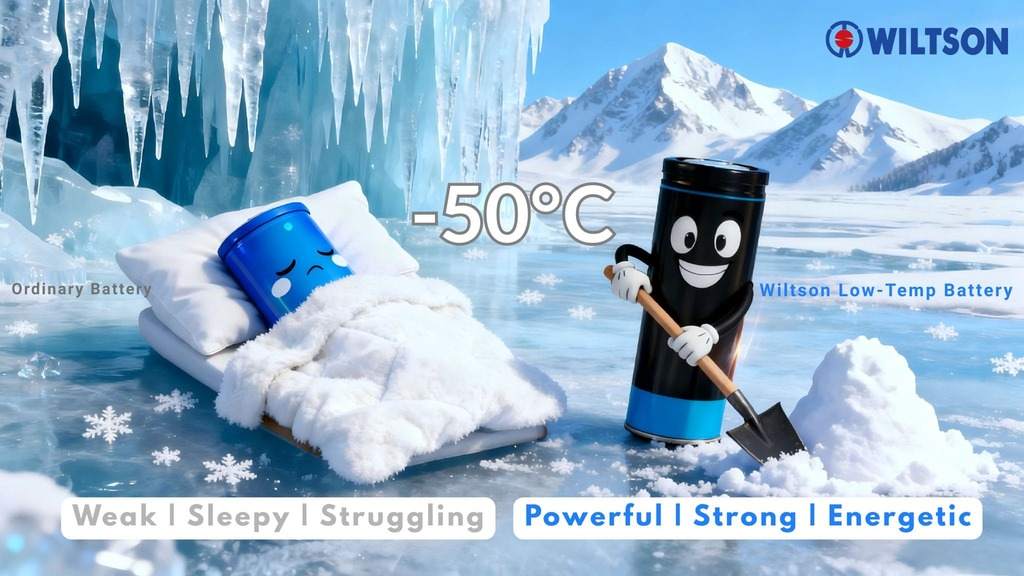
Do I Need a Self-Heating LiFePO4 Battery

Thank you! Wiltson Team will contact you shortly!
Date:2026-01-06

Do I Need a Self-Heating LiFePO4 Battery?

Do I Need a Self-Heating LiFePO4 Battery

Quick Answer: If you need to charge (not just use) your battery when temperatures drop below 0°C (32°F), you have options.

You can (1) Move batteries indoors, (2) Add external heating, or (3) Use batteries with intrinsic cold-charging capability. The question isn't whether you need heating—it's whether you need a battery that works naturally in the cold without wasting energy on thermal management.

The Critical Distinction

LiFePO4 batteries can discharge in cold weather down to -20°C with acceptable performance (70-80% capacity retention)[1]. The problem is charging below 0°C, which causes permanent damage through lithium plating[2].

Traditional solutions add heaters to force conventional batteries to work. Modern solutions engineer the battery chemistry itself to charge safely in extreme cold—no heating required.

Understanding LiFePO4 Battery Behavior in Cold Weather

The 0°C Charging Limitation

LiFePO4 batteries have a fundamental electrochemical constraint: charging below 0°C (32°F) causes irreversible damage[2]. Lithium ions plate as metallic lithium on the anode surface instead of intercalating.

  • Permanent capacity loss
  • Increased internal resistance
  • Safety risks (internal shorts)

Discharge Performance

The good news: LiFePO4 batteries can discharge in cold weather with acceptable performance degradation.

  • 25°C (77°F): 100% capacity
  • 0°C (32°F): ~90% capacity
  • -20°C (-4°F): ~70-80% capacity[1]

Decision Implication:

If your use case involves only discharging in cold weather (e.g., emergency backup power that's charged indoors), you likely do not need self-heating capability.

Self-Heating vs. Intrinsic Cold-Tolerance

Legacy Approach: Self-Heating Batteries

Integrates heating elements to warm the battery before charging. Forces standard chemistry to work in cold.

✓ Automatic operation
✗ Energy waste (30-50W/cycle)[3]
✓ Integrated solution
✗ Higher upfront cost
✓ Widely available
✗ Adds failure points

Modern Approach: Wiltson Intrinsically Cold-Tolerant

Engineers the battery chemistry to charge safely at low temperatures without heating.

✓ Zero heating energy loss
✓ Immediate charging (no delay)
✓ Simplified system
✓ Native -40°C operation
✓ Fewer failure points
✓ Lower long-term cost

When You NEED a Self-Heating LiFePO4 Battery

Self-heating capability (or intrinsic cold tolerance) is essential in specific scenarios where cold-weather charging is unavoidable.

1. Winter RV/Van Life with Solar Charging

Why: Solar charging happens during the day when you are away from shore power. Without heating or cold-tolerant chemistry, you waste solar energy.

2. Marine Applications in Cold Climates

Why: Batteries remain installed in boats stored in water. Shore power charging occurs in freezing conditions to maintain bilge pumps.

3. Off-Grid Solar Systems

Why: Battery banks are too heavy to move indoors. Heating a whole shed is inefficient. Batteries must accept charge during winter days.

When You DON'T Need a Self-Heating Battery

1. Portable Batteries (Move Indoors)

If you can easily carry the battery inside to charge, save the $200+ premium. Charge indoors, discharge outdoors.

2. DIY External Heating

For fixed installations, an insulated box with a $50 silicone heating pad and thermostat is often cheaper than specialized batteries.

3. Seasonal Use

If you only use your RV/boat in summer and store it in winter (without charging), standard batteries are sufficient.

Cost Analysis: Self-Heating vs. Alternatives

Feature Self-Heating (Legacy) DIY External Heating Wiltson No-Heating
Energy Efficiency 85-95% (heating loss) 80-90% (heating loss) 100% (zero loss)
System Complexity High Medium Low (battery only)
Upfront Cost (100Ah) $230 - $1,149[^4] $280 - $550 $350 - $450
5-Year Energy Cost $75 - $150 $100 - $200 $0

Decision Matrix

Winter RV / Solar ChargingWiltson No-Heating (Efficiency)
Extreme Cold (-30°C to -40°C)Wiltson No-Heating (Native)
Portable / Removable BatteryStandard Battery (Charge Indoors)
Fixed Installation + DIY SkillsStandard + Heating Pad
Budget Constrained + Auto ChargeBudget Self-Heating

Frequently Asked Questions

Can I charge a LiFePO4 battery below 0°C?

Standard LiFePO4 cannot be charged below 0°C. You need self-heating batteries, external heat, or Wiltson's intrinsically cold-tolerant batteries that charge safely at -20°C.

Do I need heating for discharging?

No. LiFePO4 discharges safely down to -20°C. Heating is only critical for charging.

How much does a self-heating battery cost?

Prices range from $230 to over $1,100 depending on quality. Wiltson offers competitive no-heating solutions at $350-$450.

References

  1. LiFePO4 batteries retain 70-80% capacity at -20°C during discharge - LiFePO4 Battery Shop
  2. Charging LiFePO4 below 0°C causes lithium plating and permanent damage - Victron Energy
  3. Self-heating systems consume 30-50W during 15-30 minute heating cycles - Major manufacturer specifications
  4. Self-heating LiFePO4 battery pricing (2026) - Market research across standard and premium brands

© 2026 Wiltson Energy. All rights reserved.

Looking for Our

Products and Services?

YES