

Why Your −40°C-Rated Field Instruments Go Dark in Winter: The Battery Gap Scientists Miss

Thank you! Wiltson Team will contact you shortly!
Date:2026-04-03

Why Your −40°C-Rated Field Instruments Go Dark in Winter: The Battery Gap Scientists Miss

Why Your −40°C-Rated Field Instruments Go Dark in Winter: The Battery Gap Scientists Miss
Scientific Measurement InstrumentsApril 3, 2026

Why Your −40°C-Rated Field Instruments Go Dark in Winter: The Battery Gap Scientists Miss

The instrument operates at −40°C. The battery doesn't. Here is how to close the most overlooked power gap in remote research deployments.

EJ

Ethan Jin

Senior Battery Engineer

Field Instruments

There is a detail that almost every field deployment checklist gets wrong.

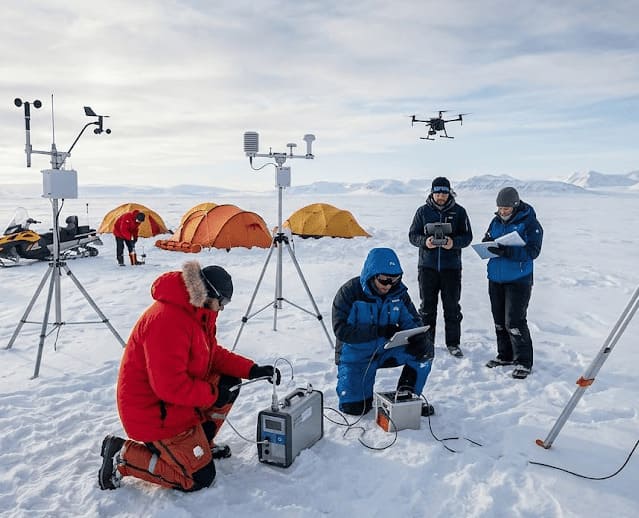
The instrument is rated to −40°C. The housing is weatherproof to IP68. The data logger has been running in test conditions for eight months without a single missed measurement. The procurement team signed off, the logistics team packed the units, and the research station has been up since October.

Then February arrives. Temperatures drop to −28°C for eleven days straight. The instruments survive — they were designed for this. But the data record has a gap. Eleven days of nothing, right through the coldest stretch of the season.

The cause is not the instrument. It is the battery.

Specifically, it is the fact that "instrument operates at −40°C" and "battery charges at −40°C" are two completely different specifications — and in most deployments, only one of them is true.

The −40°C Rating Doesn't Apply to the Battery

When a manufacturer specifies a −40°C operating range, they certify the electronics, seals, and mechanics. That specification says absolutely nothing about the battery, which has stricter chemical limits.

ParameterInstrument SpecStandard LFP Battery Reality
Operating temperature−40°C−20°C (derated); ~0% usable at −40°C
Charging temperatureN/A to housing0°C minimum (BMS lockout)
Capacity at −20°CFull (electronics unaffected)30–60% of rated capacity
Capacity at −30°CFullLess than 20%
Autonomy in deep winterGoverned by housing designGoverned by battery chemistry

The Battery Management System (BMS) charge cutoff at 0°C is not a defect—it is a protection feature to prevent irreversible lithium plating. Your instrument's housing kept the electronics at −5°C. The BMS cut charging because ambient dropped to −2°C. By morning, there is no charge in, only load out. Eleven days later, the battery is flat.

Three Partial Answers

When engineers discover this problem, three solutions typically appear on the shortlist. Each only solves part of the puzzle.

1. Primary Lithium Cells

Works at −40°C reliably. However, they are single-use. The battery itself isn't the most expensive item—the helicopter flight or 8-hour hike to replace them 3 times a winter is.

High Logistics Cost

2. Heated Battery Packs

Solves chemistry by keeping cells above 0°C, but consumes 3–15W continuously. A 10W heater consumes 240Wh/day, draining more energy than winter solar panels can generate.

Energy Budget Collapse

3. Standard LFP (No Heat)

Works in temperate climates with midday thaws. But in deep cold, the BMS disables charging entirely. Discharges continuously until the data gap begins in January.

Winter BMS Lockout

Low-Temperature LiFePO4

Specifications That Match Your Deployment Conditions

ConditionStandard LFPLow-Temp LFP (Wiltson)
Min charge temperature0°C−30°C
Discharge to −40°CNoYes
Capacity at −20°C30–60%~85%
Capacity at −40°C~0%~55%
Heater requiredYes (below 0°C)No
Cycle life at −20°C800–1,200 cycles1,500+ cycles

The heater elimination has a second-order effect: it returns 5–15W to your power budget.

A concrete example: A monitoring station drawing 8W continuous. A 40Ah 12V low-temp pack at −30°C delivers ~28Ah usable (336Wh). Because no wattage goes to heating, that 336Wh provides 42 hours of autonomy without any solar input—covering the longest consecutive overcast periods at subpolar sites.

A Field Engineer's Checklist for Cold Selection

Matching a battery to a cold deployment is a five-step process. Each step eliminates one category of failure.

1

Identify true minimum ambient charging temperature

Do not use the annual average. Use the 10th-percentile overnight low during peak winter. The battery's rated minimum charge temperature must be at or below this value, with a 5°C safety margin.

2

Calculate actual power budget

Sum sensor poll current, comms burst power, idle current, and non-battery heating (like lens anti-ice). This daily Wh figure is your absolute baseline.

3

Establish solar yield for the worst-case month

At 60°N in December, expect 0.5–1.0 peak sun hours. If generation falls below demand, size the battery to cover the deficit for 7–14 days.

4

Apply cold derating to capacity

With low-temp LFP, multiply nominal capacity by 0.55 for −40°C, or 0.70 for −30°C. Your instrument cycles at field temperatures, not lab conditions.

5

Confirm BMS low-temperature settings

A low-temp battery requires a BMS configured for −30°C charge enable, with current tapering to 0.1C between −30°C and −10°C. Do not accept a default 0°C lockout.

Three Measurement Scenarios Altered by Chemistry

Alpine Met Station

2,800m Elevation / −32°C Lows

With standard LFP, charging stops in Nov. Data gaps ruin spring reservoir forecasting. With low-temp LFP, charging continues to −30°C. Snowpack data remains complete all winter.

Permafrost Network

Western Siberia / Remote Logistics

Primary lithium required $6K helicopter flights per zone 3x a winter. With low-temp LFP solar, replacements drop to once annually. Logistics costs shrink by 80%.

Pharma Cold Room

Controlled −25°C / FDA Compliance

Standard LFP cuts charging at 0°C. With low-temp LFP, monitors recharge via low-voltage rails inside the cold room, ensuring FDA 21 CFR Part 11 compliance without removal.

Frequently Asked Questions

Can low-temp LFP charge via solar panel at −30°C without adjusting the controller?

The battery can receive charge at −30°C, but current must be limited to ~0.1C to prevent plating. A compatible MPPT controller with temp-compensated limits is required. Batteries with integrated low-temp BMS handle this automatically by signaling the controller. Confirm your controller supports this.

How does it compare to primary lithium (Saft LS / Energizer) for field tech?

Primary lithium is perfect for single sensors in extremely remote spots with zero solar. But for networks of 10+ instruments with solar access, low-temp LFP is vastly more economical at scale (amortized cost per cycle <$0.05 vs. $1.50–20 per primary cell replacement).

What exact BMS configuration is required?

Charge enable: −30°C min. Discharge cutoff: −40°C. Charge taper: 0.1C from −30°C to −10°C, normal above −10°C. Most off-the-shelf BMS units default to 0°C charge enable. Specify a low-temp BMS explicitly.

Does cold cycling reduce service life compared to room temp?

Yes, slightly. At room temp, cycle life is 2,000+. At −20°C, it's roughly 1,500 cycles. For an instrument doing one cycle per day, 1,500 cycles represents over 4 years of continuous deep-cold operation (much better than NMC chemistry).

Is low-temp LFP safe for pharma/lab cold storage?

Yes. LFP does not undergo the exothermic decomposition seen in NMC, eliminating thermal runaway risks. Packs rated to IEC 62133 and UN 38.3 are heavily used in cold rooms and regulatory FDA environments.

Stop Designing for Instrument Specs. Design for Winter.

The electronics survived. The power system failed. Low-temperature LiFePO4 charges directly at −30°C. No heater. No BMS lockout. No winter data gap.

Get Battery Specs for Your Field Instruments

Specify your minimum ambient and power budget, and we will size the system.

&copy; 2026 Wiltson Energy. All rights reserved.

Scientific Measurement & Field Engineering Series

Looking for Our

Products and Services?

YES